
Kingman County Criminal Court Records
Criminal court records in Kingman County are maintained through the District Court case system once a prosecutor files Kansas-law charges. The case file may begin with a complaint or information, then grow as the case moves through first appearances, arraignment, bond, motions, hearings, plea negotiations, trial settings, disposition, and sentencing. The District Court clerk maintains the court record, while law enforcement and the jail maintain separate arrest, booking, and custody records.
Kingman County is served by Kansas District Court in the 30th Judicial District. The Kansas Judicial Branch identifies District Courts as trial courts of general original jurisdiction, and the local court handles felony criminal cases, state misdemeanor matters filed in district court, traffic or fish-and-game cases filed there, and related proceedings. Municipal ordinance and many city traffic cases are handled by the City of Kingman Municipal Court, so the first step is always to identify the court level.
The Kingman County Attorney office page is a key criminal court records source because that office prosecutes adult and juvenile Kansas-law violations through Kingman County District Court.
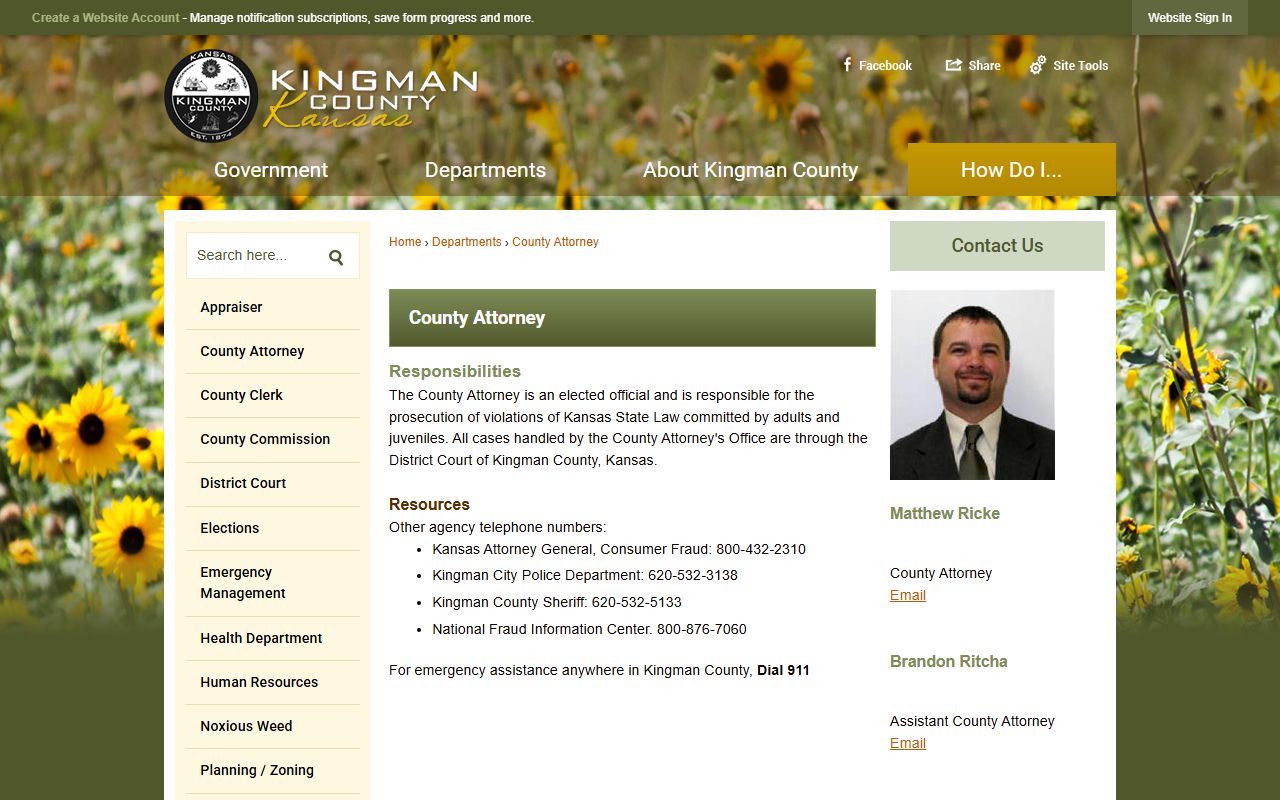
That prosecutor role explains why jail charges can change before the final criminal court record is complete.
Search Kingman County Criminal Court Records
Use Kansas CaseSearch for public District Court criminal case information. Search by case number if known, because it is the cleanest match. If there is no case number, search by defendant name and check the court, county, case type, filing date, and docket events before relying on a result. A missing case may be municipal, sealed, too old for the online display, not public under Rule 22, or not yet filed by the prosecutor.
- Search Kansas CaseSearch by case number, defendant name, business name, or citation if applicable.
- Confirm that the result is tied to Kingman County District Court or the correct municipal venue.
- Read the docket from the first filing forward to see how charges changed over time.
- Check disposition entries before treating a charge as a conviction.
- Contact the District Court clerk for certified copies, older files, or records not available online.
For the arrest-to-charge path, use Kingman County arrest records and court charges. That topic focuses on booking data and formal charges, while criminal court records focus on the court case and outcome.
Kingman County Criminal Case Flow
The court record grows by stages. Charges are filed, the defendant appears, bond or release conditions may be entered, motions may be filed, and the case may end by dismissal, diversion, plea, trial, acquittal, conviction, or sentence. A docket entry may be short, but the full criminal case file may include the complaint or information, orders, plea forms, sentencing documents, and later probation events.
Case flow: Charges Filed › Arraignment › Pretrial / Motions › Plea or Trial › Disposition › Sentencing
| Stage | What Happens |
|---|---|
| Charges filed | The County Attorney files a complaint or information in District Court. |
| Arraignment | The defendant hears the charges and enters a plea. |
| Pretrial / motions | The parties file requests, set hearings, address evidence, and prepare for plea or trial. |
| Plea or trial | The case resolves by plea, trial verdict, dismissal, diversion, or other court action. |
| Disposition | The record shows the outcome for each charge. |
| Sentencing | The court enters custody, probation, costs, restitution, fines, or other terms after conviction. |
The County Attorney staff directory identifies Matthew Ricke as County Attorney and Brandon Ritcha as Assistant County Attorney.
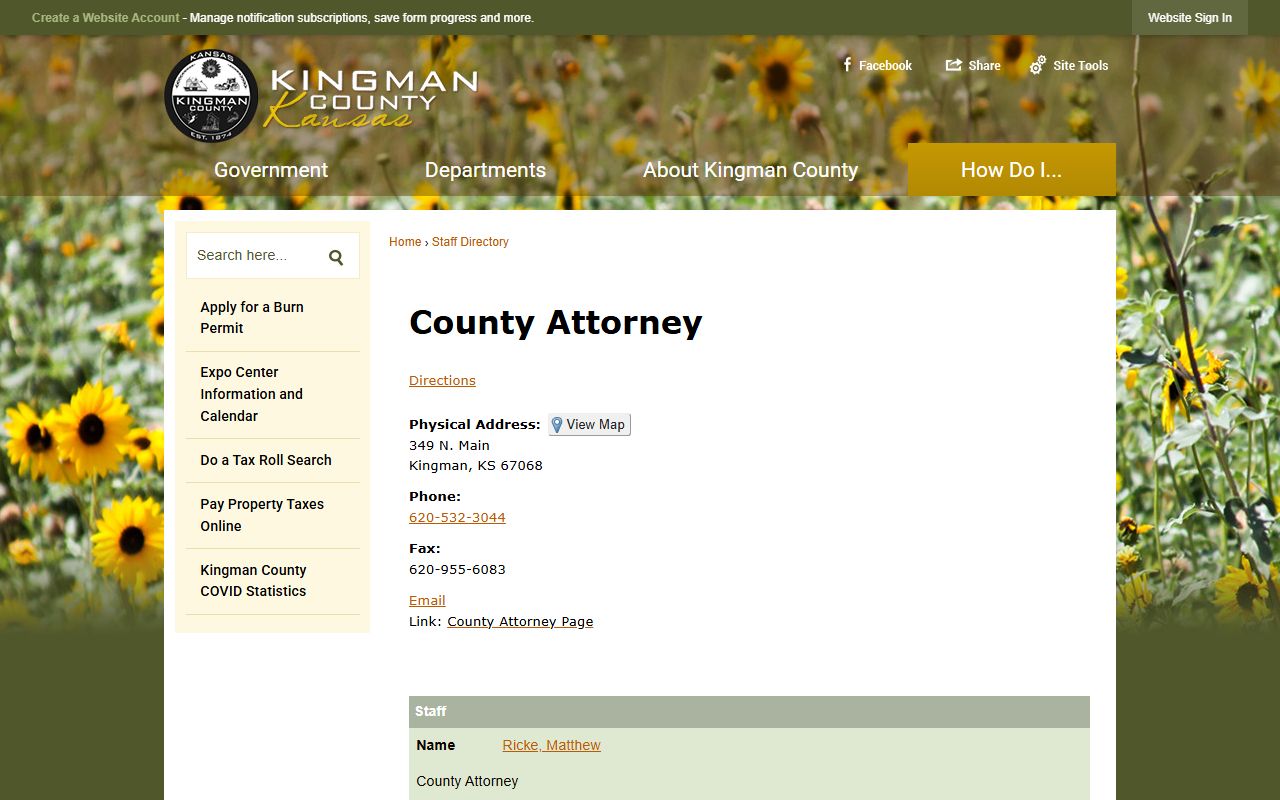
Those office details tie the filed criminal case to the local prosecution function rather than to a private background search.
What Kingman County Criminal Records Show
A Kingman County criminal court record may show both accusation and outcome. That is why each charge must be read through its final disposition. The same case can include several counts, amended counts, dismissed counts, and one or more convictions. Public fields may be limited by Kansas Rule 22, the user's role, case type, sealing order, or statutory restriction.
| Field | What It Shows |
|---|---|
| Case number | The District Court identifier used by CaseSearch and the clerk. |
| Defendant | The person charged, with identifying data limited or redacted where required. |
| Charges | Counts filed by the prosecutor, including statute references or short descriptions when public. |
| Bond / release | Bond amount, release terms, warrant events, or custody-related orders when shown. |
| Plea | Guilty, not guilty, no contest, diversion-related action, or later plea changes. |
| Motions and hearings | Requests, settings, continuances, hearings, and rulings entered on the docket. |
| Disposition | Dismissed, convicted, acquitted, diverted, amended, or other outcome by charge. |
| Sentence | Custody, probation, fines, costs, restitution, conditions, or post-sentence review where public. |
Charges vs Convictions
A charge is an accusation filed in court. A conviction is an outcome after a guilty plea, no-contest plea treated as a conviction, or trial verdict. A Kingman County criminal court record can show charges that were dismissed, reduced, amended, or resolved by diversion. Do not treat the arrest charge or the first filed count as the final result without reading the disposition.
| Charge | Conviction | |
|---|---|---|
| Stage | Filed accusation after prosecutor review. | Final or resolved finding of guilt by plea or verdict. |
| Record meaning | Shows what was alleged at that point in the case. | Shows an outcome that can lead to sentence terms. |
| Can change | May be amended, reduced, dismissed, or added. | May be appealed, expunged if eligible, or affected by later orders. |
The Kingman County Sheriff's Office contact page is relevant because arrest and booking records are separate from criminal case files.
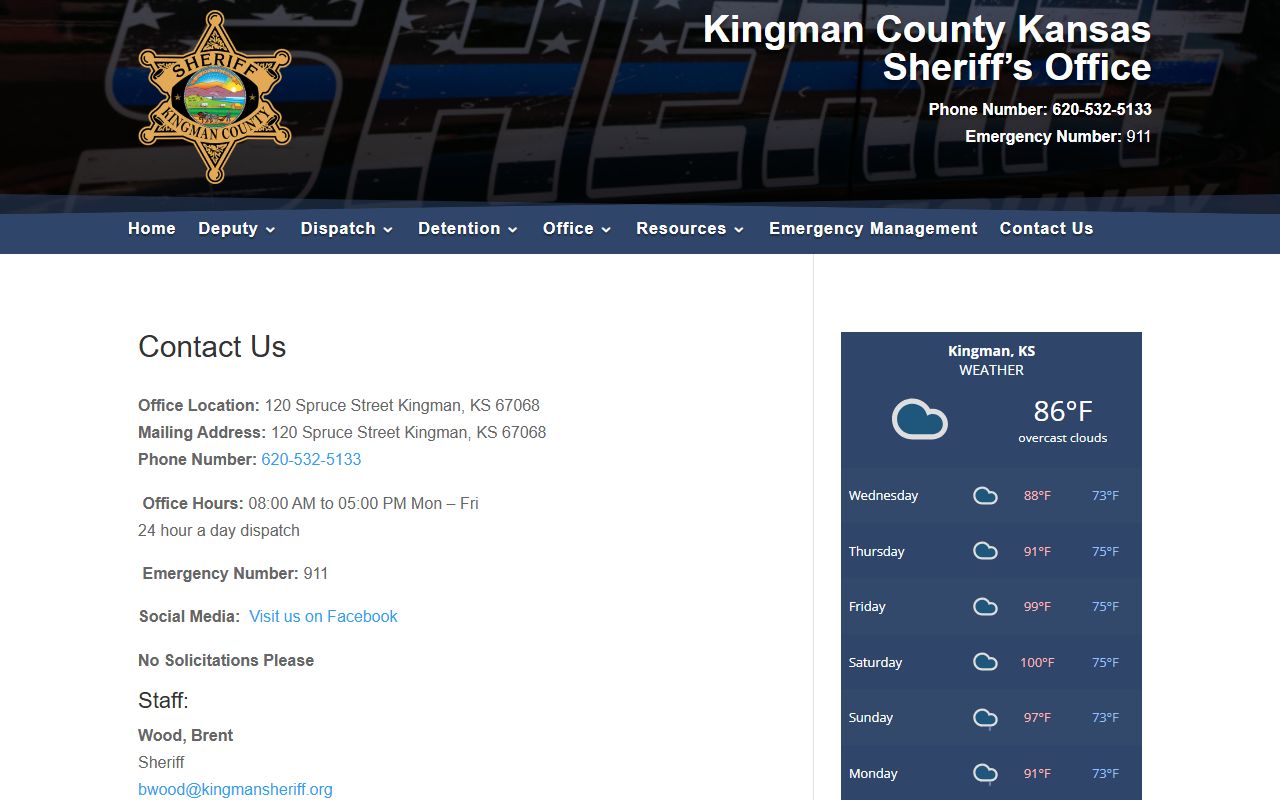
The sheriff can be a source for custody or incident records, while the clerk is the source for criminal court case records.
Reading Criminal Dispositions
Disposition means the outcome of a charge or case. In Kingman County criminal court records, a disposition may show dismissed, convicted, diverted, judgment entered, or another case-specific result. A sentence is different from a disposition. The sentence follows a conviction and may include jail, prison, probation, fines, court costs, restitution, treatment, or other conditions.
Probation violation entries can appear after sentencing. The jail roster examples in the research showed charges with Kansas statute references, including probation violation and failure to appear examples. Those booking entries are useful leads, but the criminal court record is the place to confirm what the court filed, how the defendant pleaded, and what the judge ordered.
Sealed vs Expunged Criminal Records
Restricted records are not ordinary public results. Juvenile matters, sealed cases, expunged matters, mental health details, adoption-related records, protected addresses, minor names, medical data, and personal identifiers may be hidden or redacted. Expungement is a court process that limits public access to eligible arrests, convictions, diversion agreements, or juvenile matters.
| Sealed | Expunged | |
|---|---|---|
| Visibility | Closed from ordinary public access by law or court order. | Public access is limited after the court grants statutory relief. |
| Common basis | Juvenile, adoption, safety, confidential data, or court order. | K.S.A. 21-6614, K.S.A. 22-2410, or K.S.A. 38-2312 where eligible. |
| Practical effect | May still exist for court or agency purposes. | Not destroyed for every purpose, but public lookup is limited. |
K.S.A. 21-6614 covers expungement of certain adult convictions, arrests, and diversion agreements.
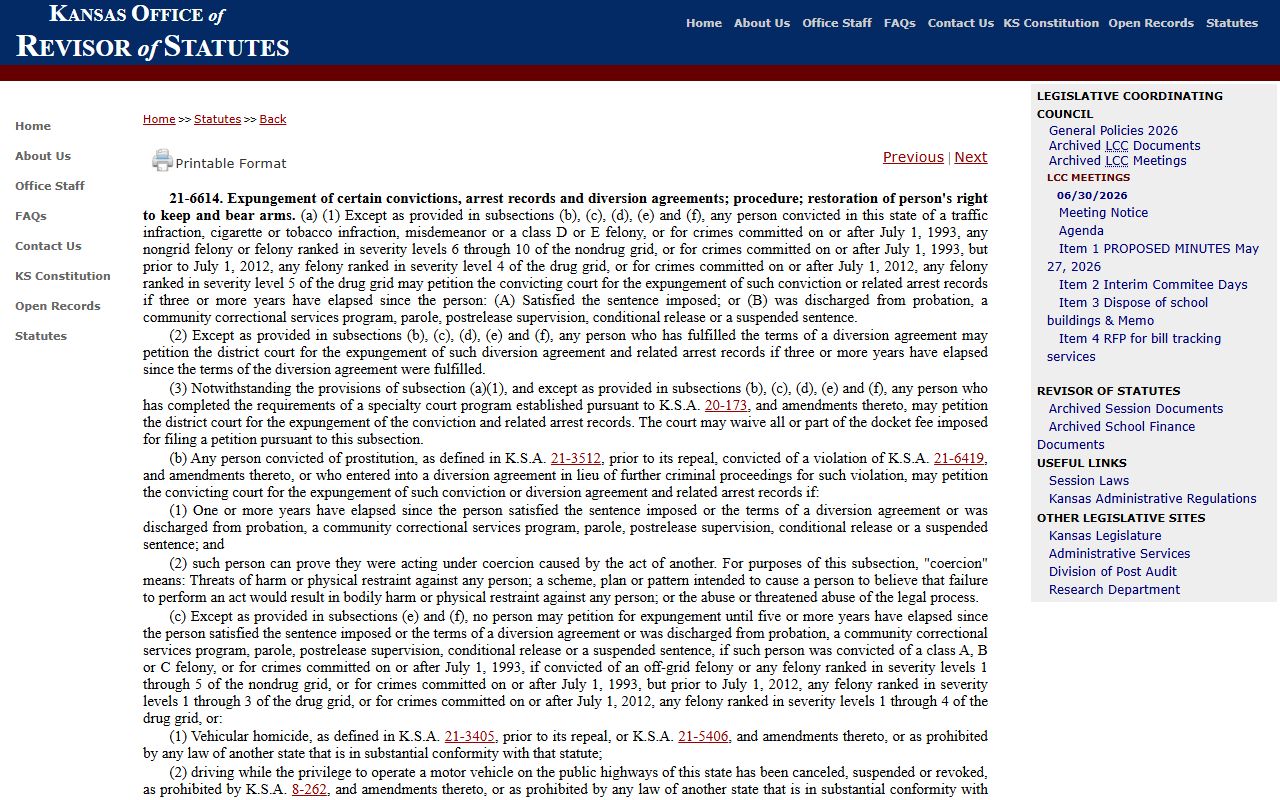
Adult expungement relief is case-specific, so the local District Court clerk or Kansas court forms should be checked for current filing steps.
K.S.A. 22-2410 is the Kansas arrest-record expungement statute relevant to criminal court records.
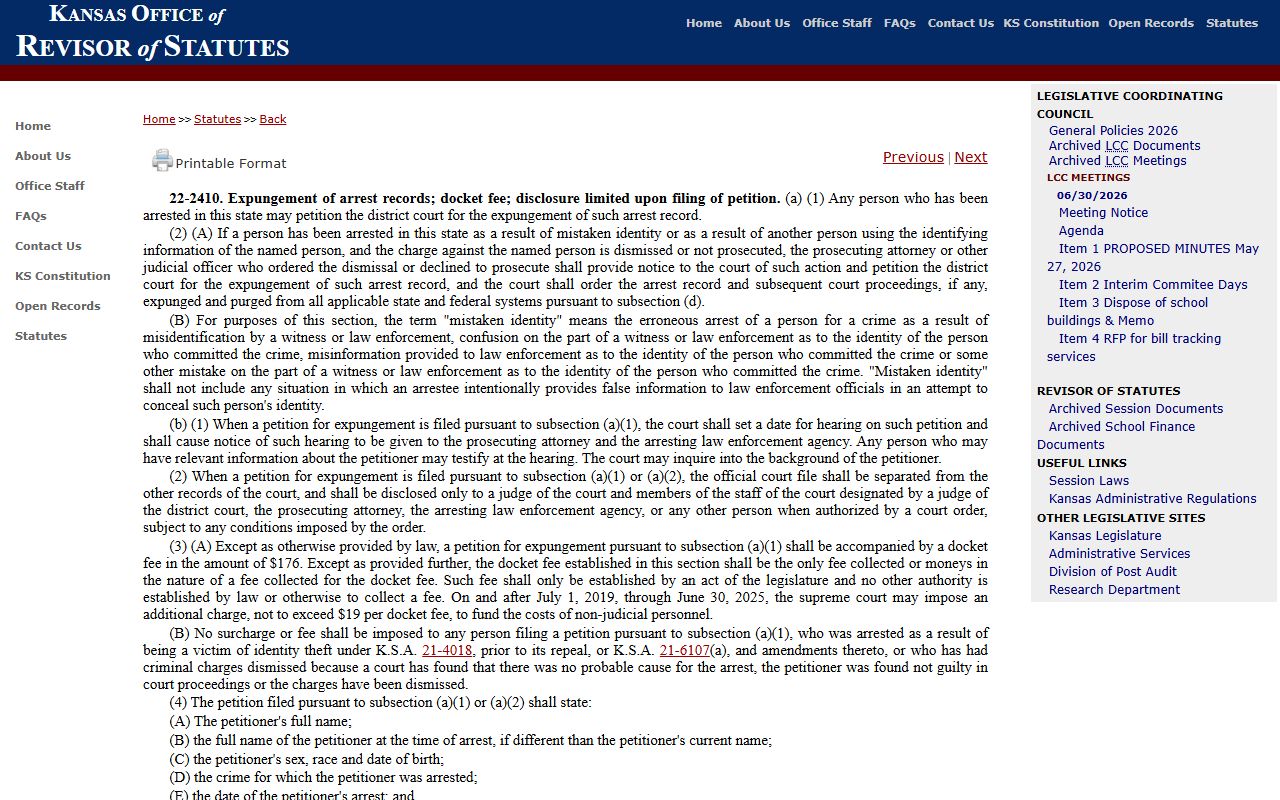
Arrest expungement can affect public access even when an arrest did not become a conviction.
Public Access to Criminal Court Records
Kansas access rules allow public review of many criminal court records, but the access channel matters. CaseSearch provides public district court case information. Courthouse terminals support public viewing of case records and events under Rule 22. The Kingman County District Court clerk handles local file questions, copies, certifications, and older or hard-to-find records. Court copy fees located in the research include $0.25 per page, $10 per certified document, and mailing fees set by the Kansas Judicial Branch.
K.S.A. 45-221 is important because it lists records agencies are not required to disclose, including criminal investigation records and other protected categories. That statute does not turn every criminal court record into a closed file, but it explains why investigative records, body or in-car video, and law-enforcement materials may be treated differently from public case dockets.
K.S.A. 45-221 closed-record categories frames the limits on some Kingman County criminal justice records.
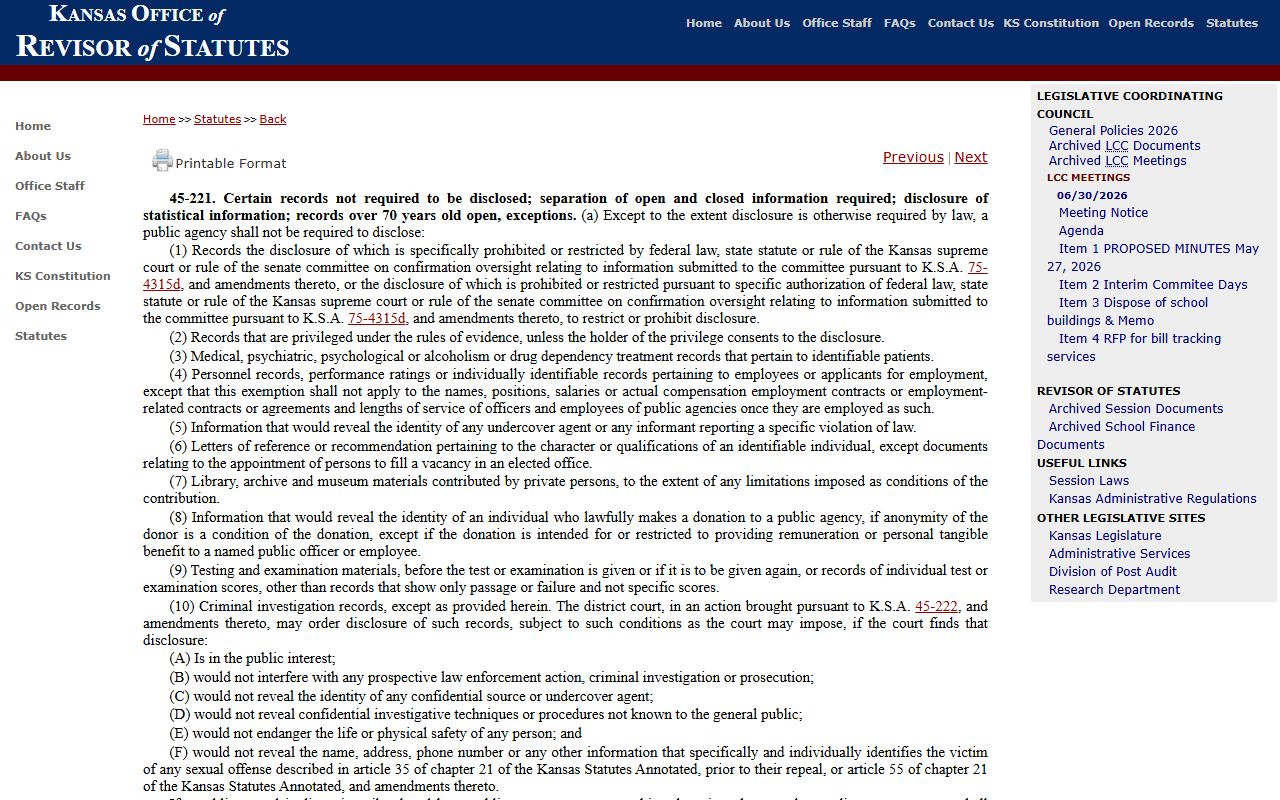
For the court case itself, read the docket and disposition; for law-enforcement records, use the sheriff's KORA process when public access is available.
Restricted Kingman County Criminal Records
Juvenile criminal matters are restricted. Sealed cases and expunged cases should not be expected to appear in public portals. Personal identifiers and protected addresses may be redacted. Criminal investigation records can be closed under Kansas law even when a related court case is public. People seeking appointed counsel should request it through District Court; the research did not locate a Kingman County-specific public defender office, and assignment is handled through the Kansas indigent defense system.
The practical record chain is local and specific. Kansas-law prosecutions go through the County Attorney and District Court. Arrest and custody questions go to the Sheriff's Office or jail records channel. Full criminal case copies, certifications, and disposition questions go to the Kingman County District Court clerk at 130 N. Spruce Street, 3rd Floor, Kingman, KS 67068, phone 620-532-5151.